1. The most revealing sentence in this news
On October 15, 2026, Meta released **Muse Spark Open** and described it in its own blog as "the most capable US open-weight model to date."
Worth flagging up front: **that is Meta's self-assessment of its own product, not an independently verified ranking.** As we'll see, the word "US" in that sentence is doing real work.
The spec sheet alone carries weight:
| Metric | Value |
|---|---|
| Total parameters | 816 billion |
| Active per pass | 42 billion (MoE) |
| Context window | 1M tokens |
| Modality | Natively multimodal (text/image/video/audio) |
| Primary focus | Coding, agents, long-horizon tasks, complex software engineering |
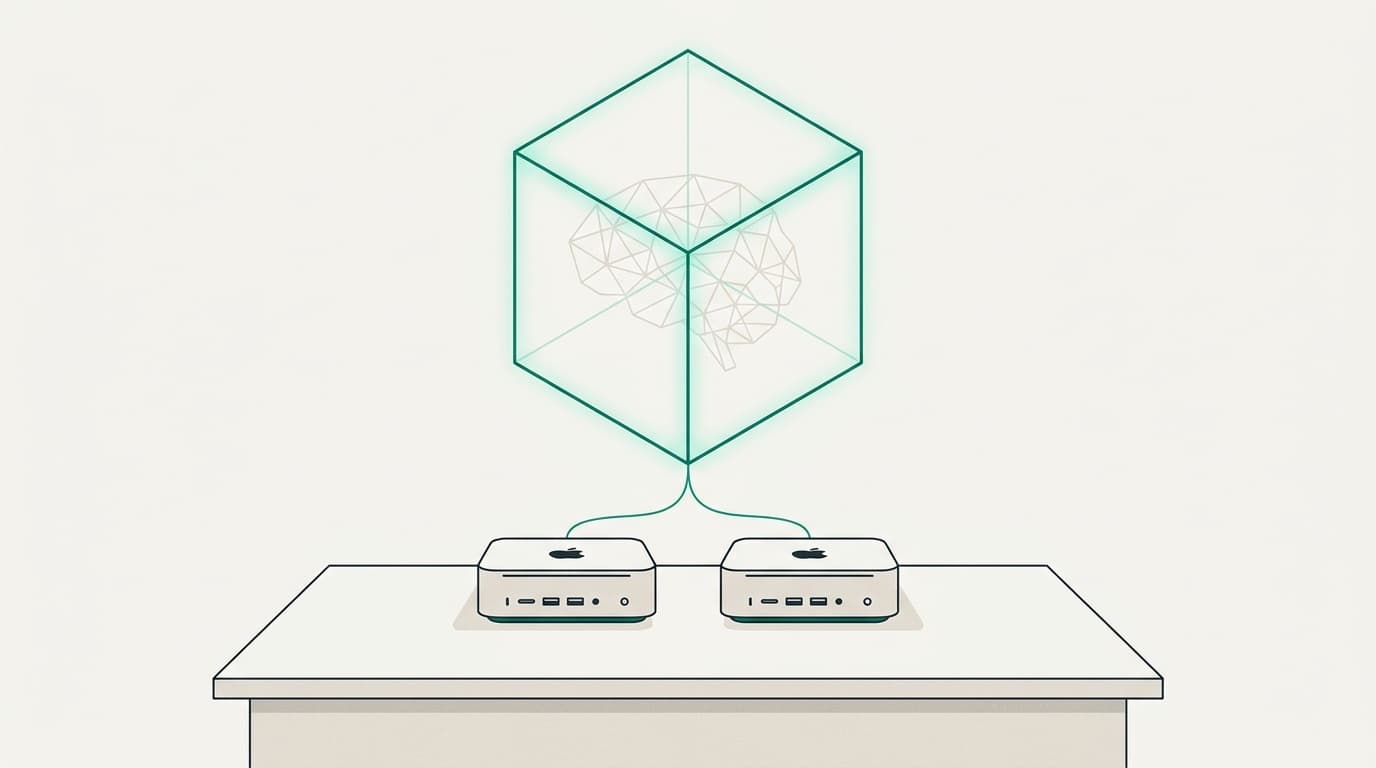
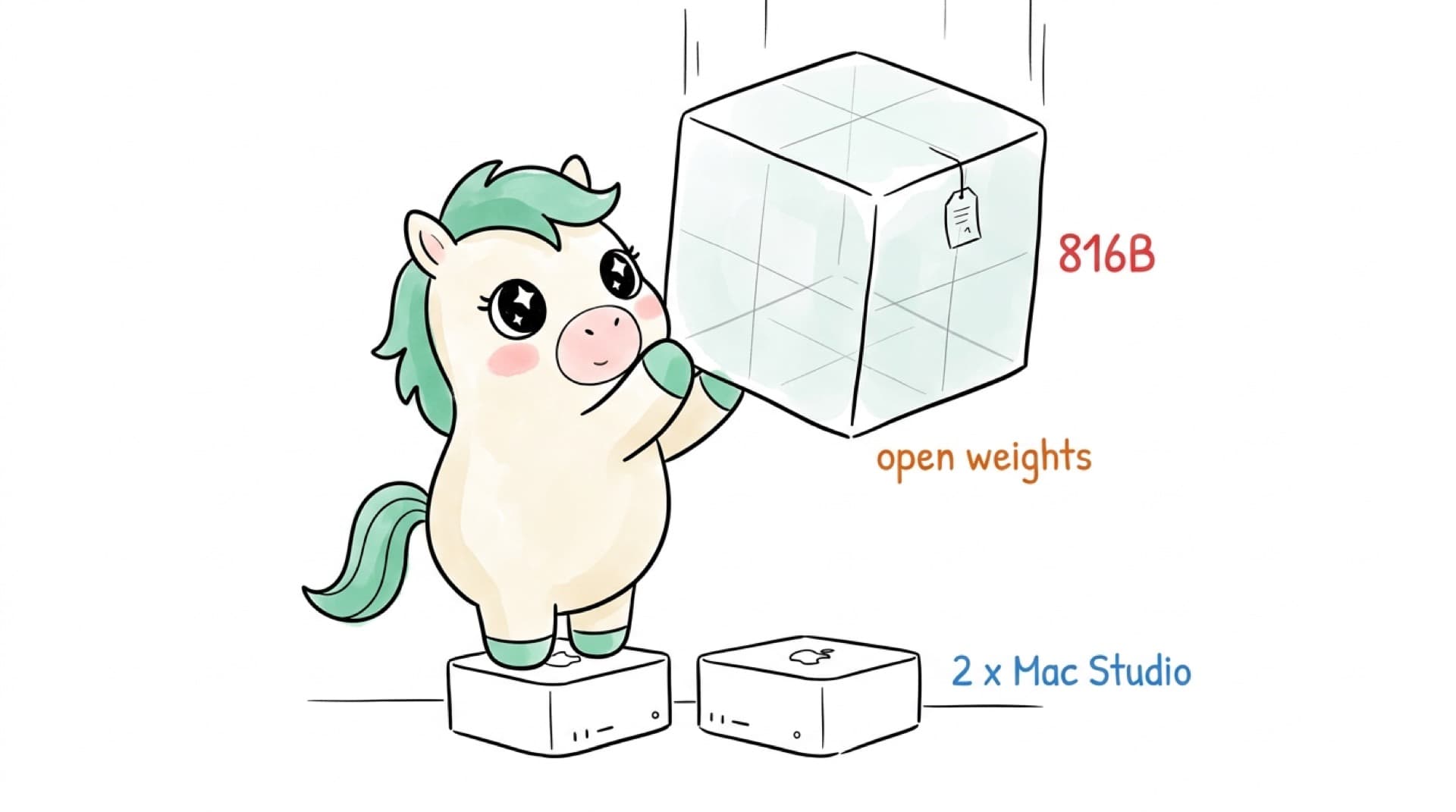
But what pushes this past "another model launch" is the sentence right after it: **It is the first frontier-class model of its kind that can run locally on a Mac Studio with Apple's M5 Ultra chip, via the latest MLX framework.** Two of them.
Apple's unified memory architecture lets a single M5 Ultra's integrated GPU address up to **512GB**, so two machines together approach 1TB. The chip's memory bandwidth is **1.2 TB/s** (up from 819 GB/s on the previous-generation M3 Ultra) — fast enough to read the small slice each token needs. Apple's own research blog, published October 15, reports the measurement plainly: **on a tensor-parallel cluster of four Mac Studios, Muse Spark Open decodes at over 36 tokens/second** — well above average human reading speed. Two-machine tensor parallel: 24.99 tok/s. Two-machine pipeline parallel: 15.74 tok/s.
One clarification matters here: at native BF16 precision, the parameters alone need **more than 1.6TB** of memory. Even in 4-bit NVFP4 quantization, the footprint is roughly **493GB**. It **cannot** run on a single machine — cross-machine parallelism isn't a nice-to-have. That's where "two" comes from, and it isn't marketing framing.
There's a second story buried in the technical detail: **this is a rare public collaboration between Meta and Apple.** The two companies have spent more than a decade fighting over privacy, ad tracking, and platform control. According to Axios, Meta's chief AI officer Alexandr Wang put it memorably — they are "excited for mommy and daddy to be playing nice again." Per 9to5Mac, Wang said the two companies had been working together for several months and credited former Apple executive **Daniel Gross** with playing a "really big role in kind of getting the two companies to work nicely together." Bloomberg reported that Zuckerberg publicly thanked Apple CEO Ternus with a photo of the new model running on a Mac.
**Why does this deserve its own paragraph?** Because for two years, "running a large model locally" had an unspoken ceiling: **whatever fits on your machine is a size down.** What runs on your device is always a shrunken version of what the cloud can do; if you want frontier capability, you go back to renting someone else's data center. Putting 816B parameters onto two desktop machines cracks that ceiling for the first time. **But the real signal in this news sits in two places Meta had no intention of emphasizing.**
2. First reversal: Meta didn't give you its best
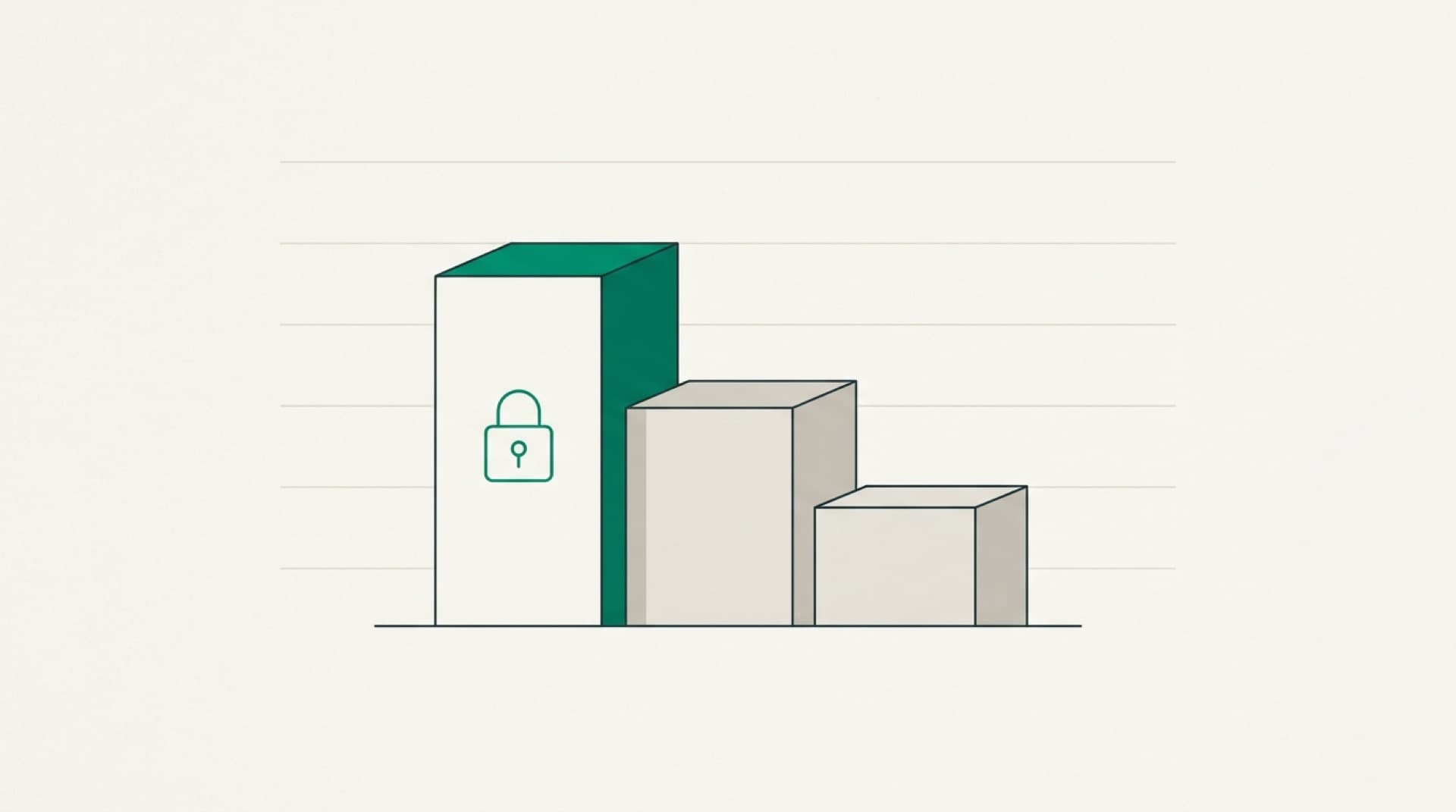
The same week, on October 12, Meta released its next-generation model **Muse Wonder**, described officially as "our most capable models to date, built to deliver state-of-the-art performance on personal and professional agentic tasks." Muse Wonder is available through the **Meta Model API and Muse Code**; **Muse Wonder Full is available today only to Muse Code subscribers**. Meta says Muse Wonder will soon power experiences in Muse, rolling out first to subscribers. The post's framing: this is "a major step toward personal superintelligence for everyone" — **that is the company's corporate voice, not a documented Zuckerberg quotation, and shouldn't be cited as one.** Muse Spark Open, released Thursday, **is less capable than Muse Wonder.**
Wang laid out the logic to Bloomberg:
For both safety and capability reasons, we generally don't open source our most powerful models. But we do think it's very important over time to keep open sourcing great models, and we intend to keep doing that.
Note the structure. The first half reserves capability; the second half opens the ecosystem. What Meta is doing is a precise act of tiering: **release the good-enough tier, keep the best tier inside its own commercial system.**
The play isn't new, but its shape is worth seeing clearly. The timeline makes it obvious: Meta built the open-model ecosystem with the Llama series, underperformed in the last model race, and Zuckerberg restructured AI R&D toward stronger proprietary models. Muse Spark shipped April 8, 2026; Muse Code arrived in August; the personal agent Muse launched in the U.S. on September 8; Muse Spark 1.3 took over as the previous flagship on September 2, which Wang told Bloomberg was "competitive" with Claude Fable 5.1. The prior open-weight release was **Muse Glimmer (30B)** in August. Now Meta is opening weights again — **not because the strategy changed, but because it found a better tiering position.**
Open weights widen developer reach and build developer relationships; closed frontier models keep the technical and commercial edge. Bloomberg reports Meta is building its own cloud business to sell model access and compute. Wang's judgment is that giving away Muse Spark Open doesn't undermine that business — it's the funnel: **people try it on their own devices or infrastructure first, then pay for more compute and tooling as their usage grows.** Which brings us to the first thing to think through: **You got weights, not a roadmap. You got today's tier, not the next one.**
3. Second reversal: two Chinese models beat it on the board
This one is more interesting, and Chinese-language coverage has largely skipped half of it. Meta's own comparison table shows Muse Spark Open scoring **89.2 on MCP-Atlas** (tool use, covering 220 tools across 36 live MCP servers) — ahead of every rival Meta listed, Chinese models included. On **JobBench** (long-horizon agentic work) it scored **61.8**, against Thinking Machines Lab's Inkling at 31.1 and NVIDIA Nemotron 3 Ultra at 27.2. Meta claims first place in six of the tests on its own table: workflow, tool calling, knowledge reasoning, knowledge reliability, complex visual reasoning, and image factuality. **But on the terminal-coding and long-horizon software engineering line — the model's stated primary focus — it trails.** Per SiliconANGLE's reading of Meta's official numbers, on **Terminal-Bench 2.1**: Kimi K3 at 85, **Muse Spark Open** at **76.4**, GLM 5.3 above 76.4, Qwen 3.8 above 76.4.
That is a substantive shift in the landscape: **the subject of the sentence "the most capable open-weight model" can no longer default to the United States.** When Wang says "the most capable US open-weight model," the word "US" is doing necessary work — without it, the claim doesn't reliably hold.
A note on proportion: **"most capable US model" is Meta's assessment of its own product, not a comprehensive independently verified ranking.** Open-weight competitiveness isn't just parameter count — it's real inference quality, running cost, deployment difficulty, and what developers actually experience. And the board is a track Meta chose itself; the tests it wins and the one it loses don't carry equal weight. The direction, though, is clear. On the open-weight track, Chinese labs — Alibaba, DeepSeek, Moonshot, Zhipu — have built substantial developer bases over the past two years. **Meta returns with a "best in the US" label and, on the scoreboard, has to sit at the same table as the Chinese models.**
4. "They should be American": how open weights become an industrial instrument
Now pull the camera back to the most quotable line in this story. Wang told Bloomberg:
Most of the world's AI is going to run on **open models**. **They should be American.**
It is the most honest sentence in the whole affair, and the least open one. The first half is a technical judgment: open weights will win most deployment scenarios because they're cheap, controllable, and customizable. The second half is a claim of ownership: **that win should accrue to the United States.** Read them together. A company distributes weights for free while saying which country those weights should belong to — **free distribution here isn't philanthropy. It's a standards fight, an ecosystem fight, a sphere-of-influence fight.**
Look at the rest of the week and you'll see everyone doing the same thing: **NVIDIA is stepping up in Europe.** In Paris, Jensen Huang announced roughly **$2 billion in additional** European investment within the coming week; on top of **$8 billion** spent over the past year, that puts NVIDIA's cumulative European commitment near **$10 billion**. NVIDIA's own French blog confirms all four French targets: **Doctolib** (European health tech — agents for clinicians and a patient health companion), **Entalpic** (Paris; atomic-scale advanced materials engineering for semiconductor surfaces and interfaces), **Genesis AI** (global robotics company working on foundation models, data collection, simulation, and robot hardware), and **Pigment** (Paris; an enterprise planning platform spanning finance, sales, headcount, and operations) — healthcare, materials discovery, physical AI, and enterprise planning respectively. Keep the framing straight: **the $2 billion is this new tranche, not the European total.** **Germany's federal government exited** the three-way partnership with Mistral AI and SAP announced in November 2025 — the arrangement media once called a "European sovereign AI showcase." The binding framework agreement was set aside and the project handed to the companies to pursue independently; a government spokesperson said there is no plan to procure from Mistral. German business daily Die Welt quoted industry views that Mistral's models are "a year behind the competition," with some organizations turning to Qwen, Kimi, and GLM. Mistral shipped Large 4 last week. Meanwhile, per NVIDIA's French blog, a parallel line runs alongside Muse: **NVIDIA Nemotron open models are in production in France** — LINAGORA and Docaposte won the CANUT framework, making Twake.ai the sovereign digital workspace referenced for **2,500+ French public bodies**; SBS is launching a sovereign AI platform for banks; Dassault Systèmes is building "Industry World Models" and "Virtual Companions." **China's policy track is moving on the same axis.** MIIT published an AI "industry navigation map" spanning **more than 1,000 scenarios**, has run nearly 30 regional "deep dive" programs connecting over 5,000 companies, and oversees 18 national AI innovation pilot zones, nearly 200 key technical standards, and a **¥60 billion national AI industry investment fund**. Separately, the **State Administration for Market Regulation** approved and issued **the first batch of six national standards for humanoid robots**, effective **April 1, 2027** — five technical-requirement series standards plus one specification for humanoid robot simulation and testing platforms. Get the wording right: these are **six field standards**, not "China's first humanoid robot national standard."
**"Open" is the means. "Sovereignty" is the end.** A weight file that can be copied infinitely is the cheapest and most effective delivery mechanism for national intent — it bypasses tariffs, bypasses approvals, bypasses procurement lists, and lands directly on developers' hard drives worldwide. So when Meta says "open weights," it is saying four things at once: a front door for developers, a funnel for its cloud business, a catch-up curve for competitors, and a sphere of influence for its country.
5. Open weights ≠ sovereignty: three layers you have to separate
This is the part this piece most wants to get right. **Between "downloadable" and "owned" sit three things.**
**Layer one: access — Meta did give this.** You can download 816B parameters of weights. There's no shortage of routes: Amazon SageMaker AI, Google Cloud Model Garden, Hugging Face, Microsoft Foundry Models. On the API side, **seven inference providers** were ready on day one: Baseten, Fireworks AI, Groq, Modal, Nebius, OpenRouter, and Together AI. Inference frameworks cover SGLang, vLLM, TensorRT-LLM, Hugging Face Transformers, Apple MLX, llama.cpp, and Unsloth, with optimizations for AMD, Apple, Intel, and NVIDIA hardware. For fine-tuning, there's PyTorch and TorchTitan. This layer is real. **It is the most concretely useful thing for individual users in this entire week's news.** For the first time, "a frontier model on my own machine" moved from slogan to something you can actually execute.
**Layer two: terms — Meta gave only part of this.** The model ships under the **Muse Model License**, with "limited commercial terms." The actual boundaries: no fee for developers who adapt the model or ship it inside their own software; but **any company reselling it as a hosted service that has passed $20 million in gross revenue over 12 months must sign a separate agreement**; products must carry a **"Built with Muse Spark Open"** label; and **military and critical infrastructure uses are explicitly off-limits.** Note those limits: a revenue threshold, a brand label, prohibited uses. You downloaded weights, not rights. **Someone else wrote the terms, someone else retains the interpretation, and someone else holds the pen on revisions.** The business you build on this model rests on a legal foundation that isn't in your room. And be clear about one thing: **open weights ≠ open source.** As noted in Chinese coverage, what was opened is the **model weights** — not the training data, the full training pipeline, or the R&D details. Meta says Muse Spark Open went through additional safety training and was tested against its internal evaluation framework — but the safety boundary of an open model ultimately depends on how whoever ends up with it deploys and modifies it.
**Layer three: roadmap — Meta explicitly keeps this.** This is the layer most easily overlooked and heaviest in consequence. Muse Wonder is closed. Muse Wonder Full is subscriber-only. The next, stronger Muse will almost certainly be closed too. **Which means choosing this path hooks your ceiling of capability to a schedule you have no part in deciding.** When the next capability tier arrives, at what price, under what terms, with what restrictions — you don't get a vote. The same thing is at stake in another piece of news: when OpenAI told developers that GPT-4o and GPT-4.1 would leave the API on **January 14, 2027** and recommended a migration path, teams with businesses built on those models received a date, not an option. **(That date currently comes from secondary Chinese reporting; treat OpenAI's official deprecation page as authoritative.)** **Weights mean you don't rent the cloud today. They don't give you a say in tomorrow.**
6. So what actually changed?
If all we say is "open weights aren't sovereignty," this becomes a piece of cold water — and that would be wrong. Something did substantively change, and it happens to be the **physical precondition** for every sovereignty conversation.
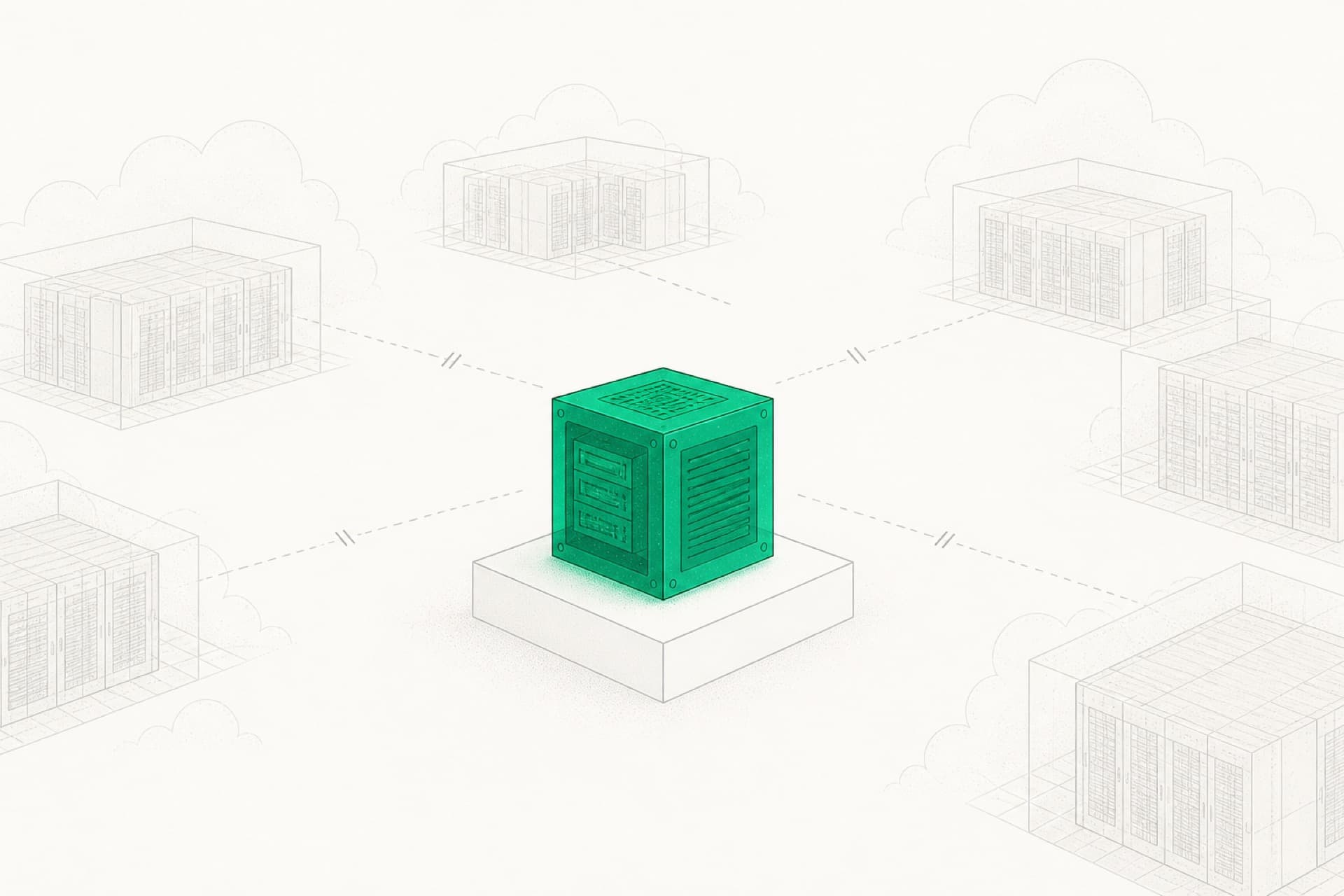
**The compute threshold moved.** Want frontier capability? You used to have two options: rent someone's cloud, or budget for a machine room only institutions can afford. With the first you own nothing; with the second you can't reach it at all. **An individual stood on neither side of that line.** A middle path now exists, and an official launch formally acknowledged it: **Two desktop machines plus a downloadable weight file equals a unit of capability that previously only a data center could provide.**
The cost has to be said plainly, because this path is not cheap. Per Cailianshe, the **512GB Mac Studio is not yet on sale — the company says late October**; a 256GB single unit with a 1TB SSD already runs **over $10,000**; a four-machine cluster of 256GB units (~1TB combined) exceeds **$40,000**. Device cost, memory requirements, inference efficiency — every constraint on local deployment remains. **"Runs on two Mac Studios" is not "runs on any Mac."**
But for the first time, "frontier-grade intelligence running on my own hardware" became a problem **you can solve with money**, rather than a qualification problem that requires becoming a company first. That matters as much as any ranking change on any leaderboard, because what moved isn't model capability — it's **where control is allocated.**
Meta's own demos make the point. Muse Code, driven by Muse Spark Open, ran several agentic workflows **entirely on-device** — submitting real iOS code changes to Ice Cubes, the open-source Mastodon client: bug fixes, new features, a full project build. And end-to-end control of DaVinci Resolve: frame-by-frame review of footage and vertical cropping. Note the nature of those tasks: **they aren't "chatting," they're "working."** An agent that edits code, cuts video, and pushes tasks forward in the background, running on your desktop — that is already very close to "your own AI corps."
One market signal that people are actually walking this path: Meta's personal agent Muse, launched September 8, drew roughly **2.8 million installs in its first 12 days** in the U.S. and Canada per Apptopia, outpacing ChatGPT's early mobile launch. **The demand to treat AI as one's own corps is already being validated.**
7. What to watch next
This week's news hands you a clean way to read what comes next: **watch the wording, watch the qualifiers, watch who kept what.**
When a company says "the most capable **US** open-weight model," that national prefix is the whole message — it's telling you that "open" is the method and ownership is the goal. When a company says "we **typically** don't open-source our most powerful models," that "typically" is the back door it left for itself. When a license is called "**limited** commercial terms," that "limited" is the interpretive room it kept. When a benchmark table wins two categories and loses three, and the three it loses to are two Chinese open models, that table is telling you the top spot on the open-weight track is changing hands. When every task in an official demo is "edit code, cut video, keep pushing forward" rather than "chat" — that tells you the product form has already shifted from **being queried** to **being put to work**.
Meta proved one thing: frontier intelligence can walk out of the data center. What it didn't prove is the other half — once it's out, who's actually in charge of it.
Nations are buying that half. Enterprises are buying that half. Individuals are next, for a simpler reason: **they have no negotiating leverage at all, so they need the shortcut.**
That shortcut is the same one every headline this week pointed to: **your own compute. Your own agents. Your own data. Your own rules.**
Hold the box.