The biggest thing about running this store is that there's never enough hands, but hiring more isn't an option either. Running a promotion means writing copy, working out procurement numbers, tracking progress, answering customers, all of it lands on one person, and there's always a mental queue, finish one thing before even looking at the next. So we tried something extreme: fire off one instruction to a dozen or twenty avatars at once, let each one handle its own piece, and see whether a single person can genuinely keep up with that many hands working at the same time.
Starting with 12 completely different tasks
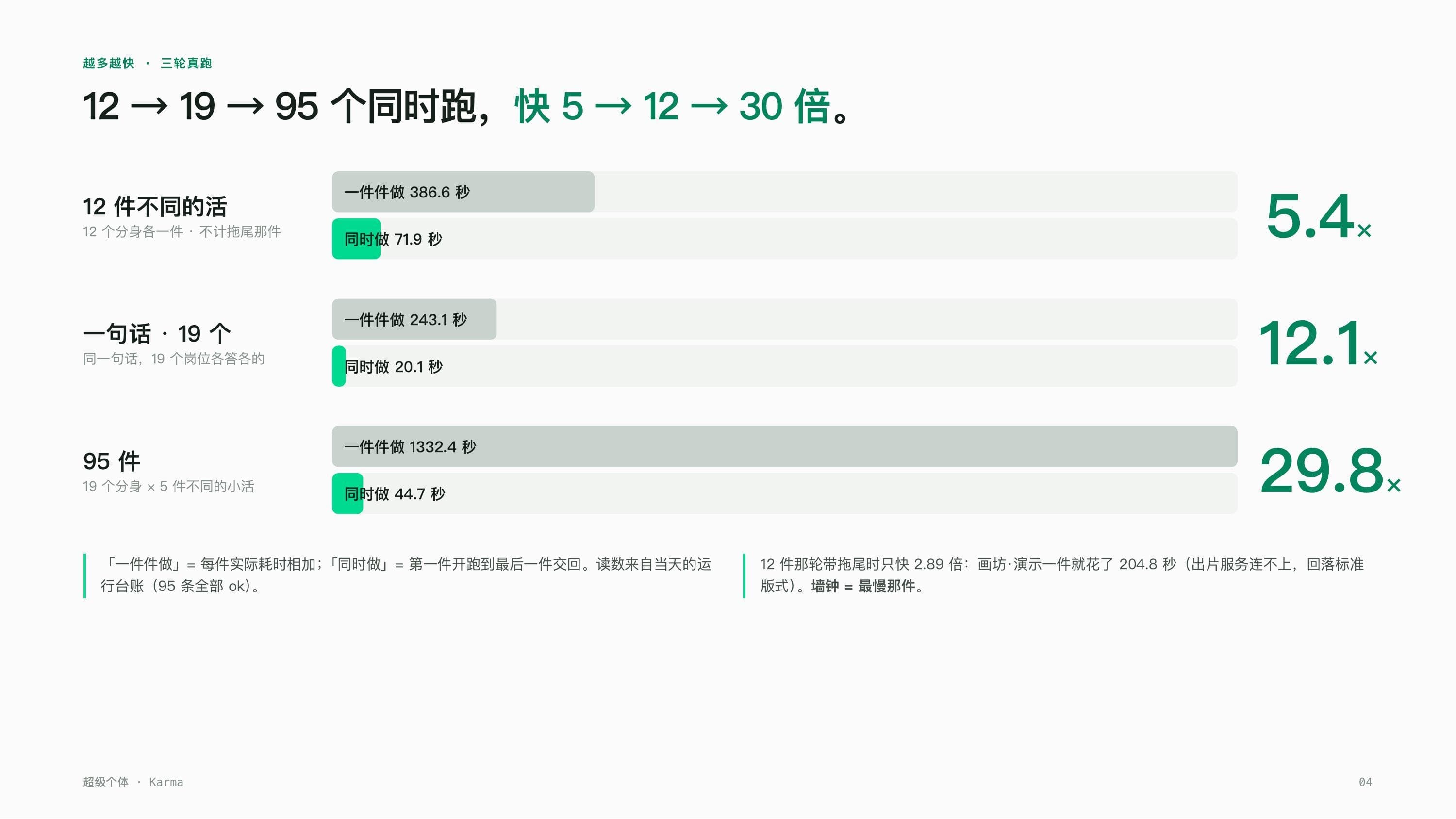
The first run was kept small, just to be safe, 12 completely different tasks sent out at once, writing copy, working out procurement, sorting a customer list, a real mix. Dispatching barely took any time at all, a dozen-plus things started moving at once, and most came back with results in short order. Doing the same work one task at a time would've taken over six minutes combined. Running them all at once compressed that down to a fraction of the time. The feeling in that moment was a little strange, not the dry sense of efficiency went up, but something closer to suddenly having a room full of people helping out.

One sentence, twenty avatars answering at once
After that first taste, it felt safe to go bigger, sending the same instruction to all 20 avatars on the account at once, a mix covering customer service, procurement, content, and data analysis, each with its own role, tone, and permissions already set up, none of them needing to coordinate with each other first. What stood out most here was the gap between sending it and it being done. Issuing the instruction felt instant, barely a hint of delay, but watching the results trickle back one by one, it suddenly hit that those twenty pieces of work really were twenty different heads thinking at once, not one head bouncing between twenty things and just looking busy.

95 tasks, 44.7 seconds, the equivalent of 22 minutes of one person's work
The final round was a genuine stress test: 19 avatars, each taking 5 different small tasks, 95 tasks total. Dispatch landed almost instantly, all 95 tasks started running at once, and in under 45 seconds, every single one had a result. Doing the same pile of work one at a time, honestly, in order, would take over 22 minutes. In other words, one person, using this setup, got through in under a minute what would otherwise take the better part of half an hour, and none of the tasks held each other up, a stuck copywriting job didn't delay the bookkeeping, and a slow bookkeeping task didn't hold back the customer reply.
19 avatars took on 5 tasks each at once, 95 tasks total, every one finished within 44.7 seconds — the same pile done one at a time by a single person would take over 22 minutes.
The most reassuring part: it stops and asks when it genuinely needs you
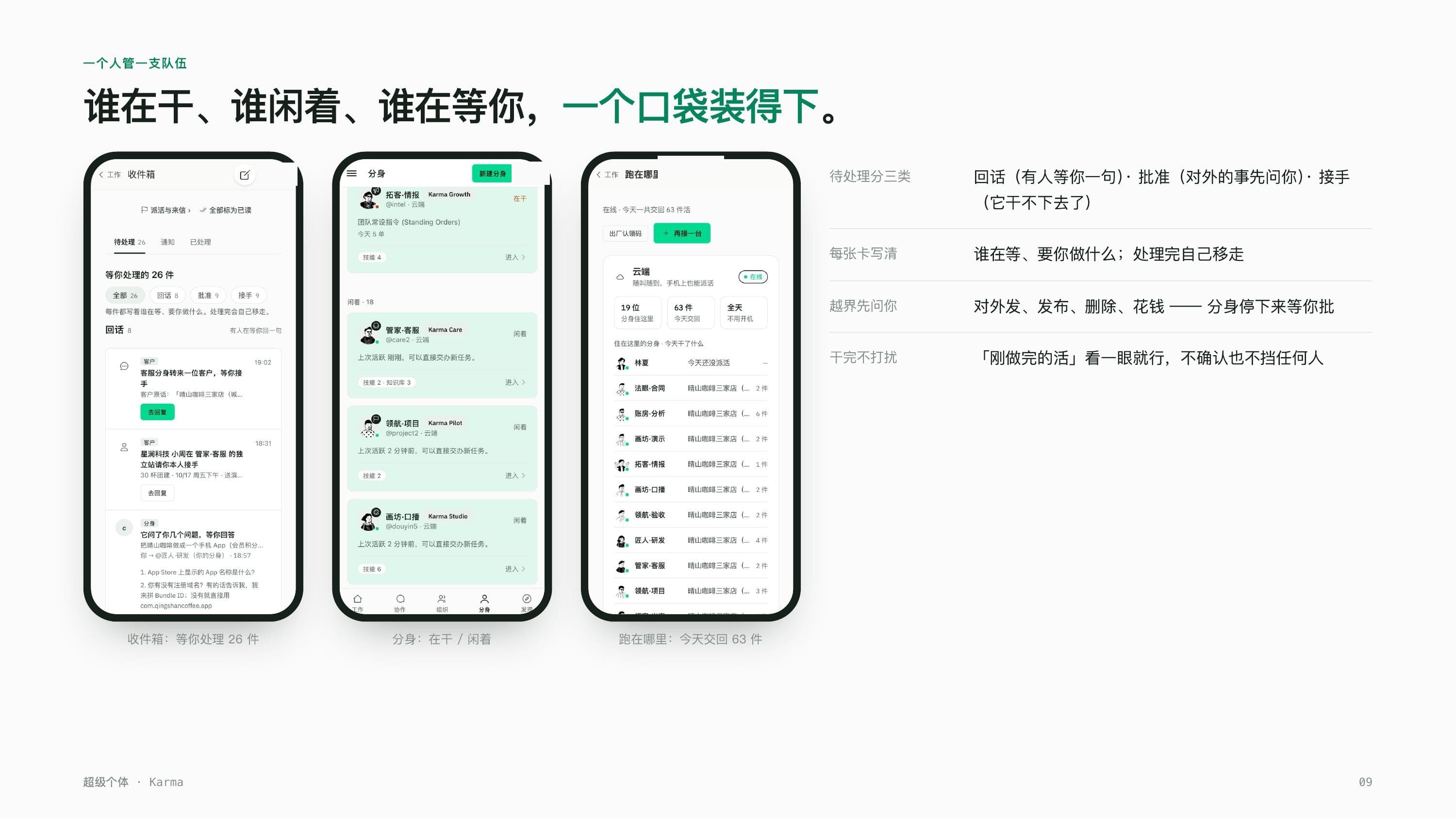
The real worry going in wasn't whether it could keep up, it was whether it might quietly make something up in a spot where it shouldn't. Running it for real put that worry to rest, the avatar doing the sales forecast hit a point where it needed actual sales figures, and instead of guessing a number and barreling ahead, it just stopped and asked. A quick reply from the phone, and it picked right back up, delivering a final forecast that checked out against a manual calculation. That instinct, asking when it's not sure instead of faking confidence, is more reassuring than the speed itself. Nobody wants to wake up and find out one of those 95 tasks was quietly made up.
What twenty avatars working at once actually saves isn't the time spent thinking, it's the time spent waiting in line for your turn. Whatever genuinely needs your call, it still stops and asks, every time.
From one person running a small team to one person running an entire company
Once that clicks, the question of how many avatars one person can actually run has a pretty concrete answer. 10 avatars is roughly like running a small team. 100 avatars is roughly like running a whole department, which is exactly the scale of that 95-task run above. Beyond that, even a scenario with a thousand avatars online at once has been checked out, just taking a headcount and confirming who's active takes milliseconds. For a small team with more work than hands, this stops being a simple efficiency bump, it's genuinely an extra layer of staff you can call on whenever you need them.