There's an old problem at our store: everyone's engaged during a meeting, tossing ideas back and forth, feeling productive. Then the second it ends, it's like none of it happened. Everyone remembers we said something about raising the price, but by how much, starting when, who's telling the supplier, ask three people and you get three different answers. It usually ends with half an hour of arguing in the group chat about who said what, which takes longer than the meeting itself.
This time it was a Saturday tasting event for a new oat-milk osmanthus latte at the west-side store. Lin Xia pulled in three teammates for a quick call: she set the direction, one reported progress, one flagged a risk, one claimed the logistics. Same as always, phone on the table, say what needs saying, everyone scatters back to work. The only difference was that this time, Karma was sitting in on the call the whole way through.
38 seconds from the meeting ending to a finished summary — shorter than it takes to walk back to your desk and pour a glass of water.
38 seconds after hanging up, the notes are already in the group
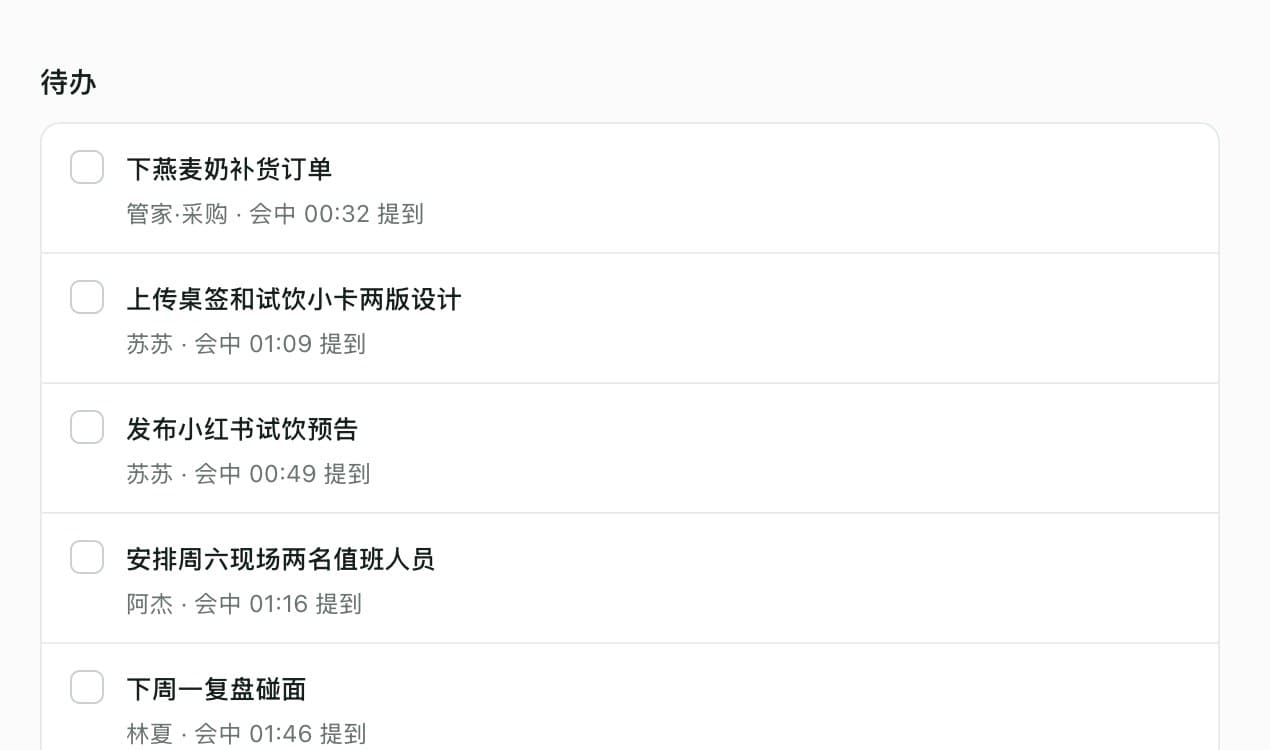
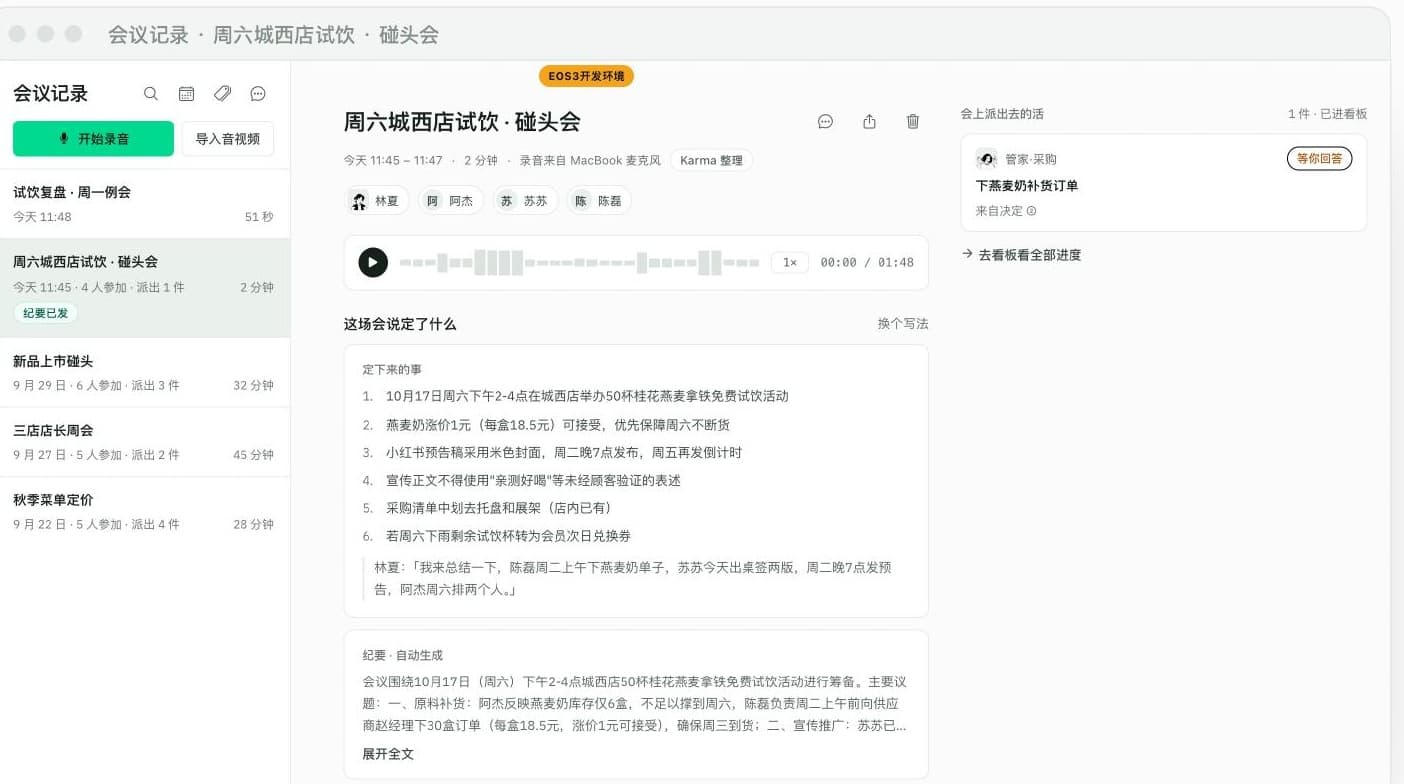
The impressive part isn't that the transcription is accurate, it's that it's so fast you barely have time to register the call ended before the notes are already sitting in the group chat. The whole meeting got sorted into 6 decisions and 5 to-dos, each one tagged with who said it and exactly when, not some vague catch-all summary, but something you can actually check against. Things like hold the free tasting from 2 to 4pm on Saturday the 17th at the west-side store, a 1-yuan price bump on oat milk is fine as long as Saturday doesn't run out, don't write unverified lines like personally tested, delicious in the copy. These are exactly the details that used to get misremembered nine times out of ten when it was left to someone's memory.
The to-dos aren't just dumped on one person and left at that, either. Placing the oat-milk restock order landed automatically on whoever handles purchasing, tagged with the exact second it was mentioned. The Monday follow-up landed under Lin Xia's own name, same deal. Whose job it is stays completely clear, there's no wiggling out of it, which honestly is a relief for everyone, nobody has to spend energy proving they actually said what they said.
Nobody introduced themselves the second time, and it still knew exactly who was who
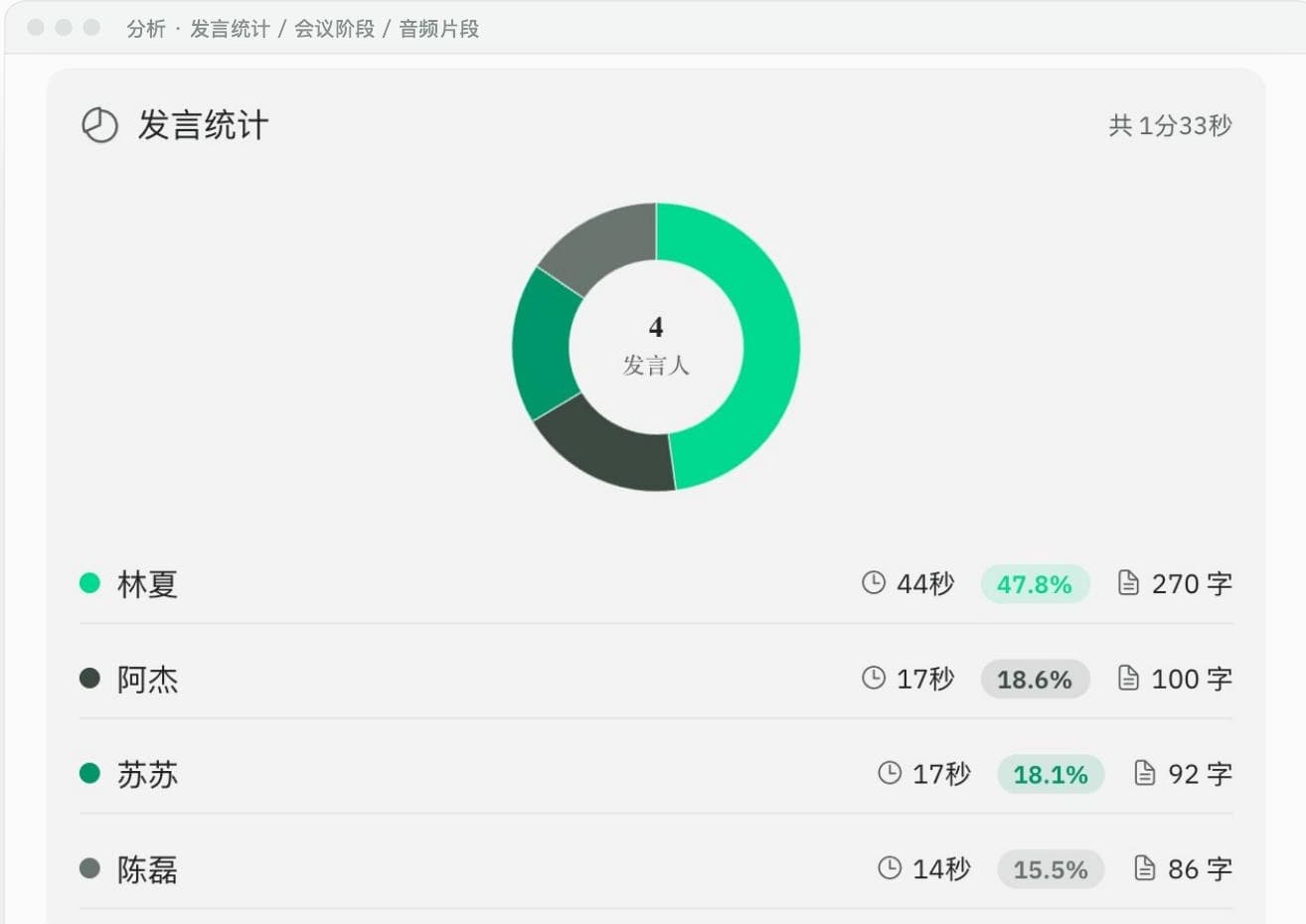
The first time, people still had the habit of saying I'm so-and-so at the start, just to be safe. The second time, probably because everyone was busy and forgot, nobody bothered introducing themselves, they just got straight into it. It didn't slow anything down, it recognized all four people by voice alone, and recognized them solidly, with confidence scores in the 0.89 to 0.95 range across the board. The idea is actually pretty simple, same as picking up a call from someone you know and recognizing their voice instantly. After the first meeting recorded a short voice sample from each person, it remembered what everyone sounded like, so nobody had to announce themselves again.
And this whole voice-recognition process runs right on your own deployed machine, nobody's voice gets shipped off to some outside server, and the voiceprint data itself is stored encrypted. On the rare chance it does get someone's name wrong, correcting it by hand sticks, it won't quietly flip back on its own, and fixing the name also updates whatever to-do was tagged under that person.
The old fear after a meeting was never forgetting, it was everyone remembering it differently, what you recall and what I recall don't match. Now who said what, and exactly when, is just sitting there in black and white. There's nothing left to argue about.
To-dos skip the retelling and go straight to the avatar handling it
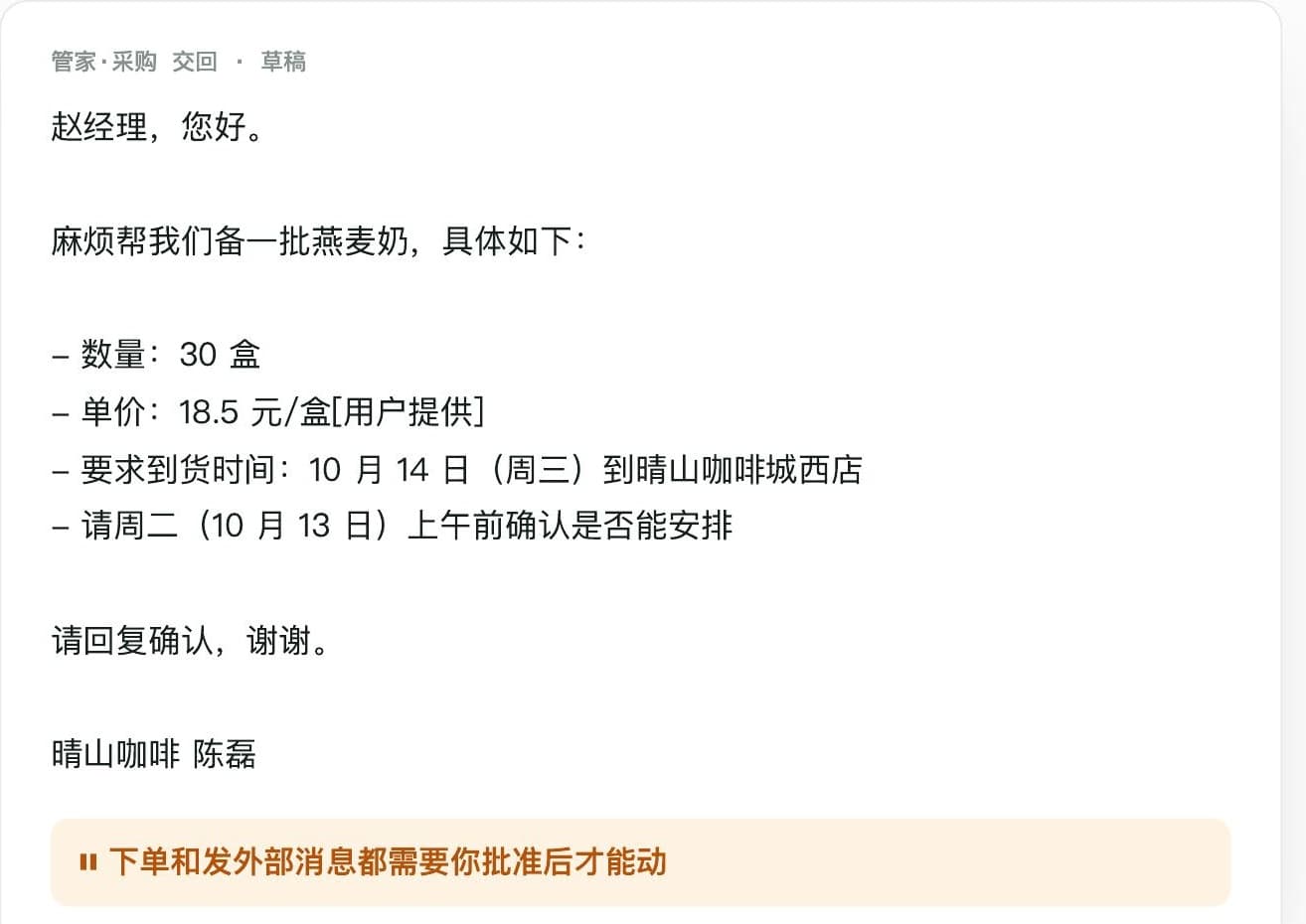
The most annoying part was never the meeting itself, it was translating those decisions afterward and relaying them to whoever actually does the work: so in the meeting we said oat milk needs restocking, can you contact the supplier. That step is just gone now. The restock to-do from the notes gets dispatched with one click to the avatar that handles purchasing, and it writes the supplier email itself, 30 cartons, 18.5 yuan each, arriving October 14th, asking for confirmation by Tuesday morning. The email's ready, but actually sending it and placing the order still wait for your nod. It only comes back to ask when something's genuinely unclear, like which phone number the supplier actually uses, or whether this email is good to send yet. Everything else that's actually its job, it just handles.
Pricing, contracts — recording the meeting doesn't mean losing control of them
Meetings often cover pricing and contract details nobody wants floating around outside the room, and the instant recording comes up, the obvious worry kicks in, where does this get stored, who can see it, can it actually be deleted later. In practice, this ended up being the most reassuring part. The recording and transcript belong only to the account that held the meeting, the content can be stored encrypted, and voice matching runs entirely on your own deployed machine without ever going out. Delete a meeting, and the recording, transcript, notes, and voiceprints all disappear together as one unit, nothing quietly resurfaces somewhere later.