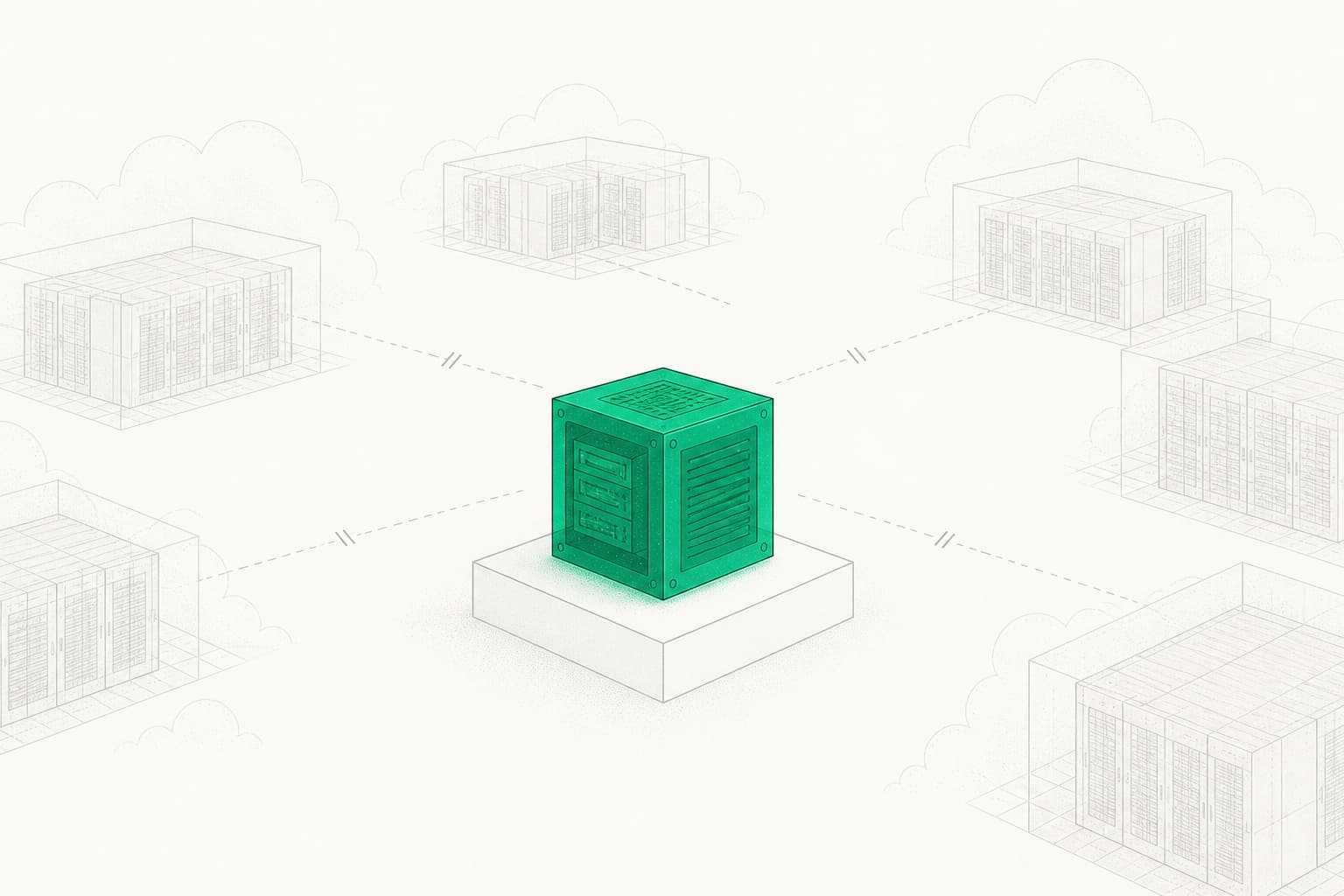
1. A week that will look obvious in hindsight
There is a particular kind of news story that reads as boring on the day it breaks and as a turning point five years later. Sovereign AI has been generating those stories all year. This week, it generated four of them in two days.
Let's take them in order, because the sequence matters more than any single item.
**Germany, Tuesday.** Handelsblatt reported — and Deutschlandfunk picked up — that the German federal government is preparing a partnership with Nvidia. The number being floated is "hundreds of millions of euros." The money goes to two things: buying compute, and training new AI models. Not chatbots. The stated target is *physical AI* — models for training robots and autonomous vehicles, plus high-performance models built specifically for industrial applications. Roughly a dozen German companies are expected to join, Siemens and Audi among them. The announcement is slated for the "Invest in Germany" summit next week.
**France, Wednesday.** Snowflake and Orange Business announced their intent to collaborate, with Orange Business acting as operating partner in France. On its face, another cloud partnership. Read the details and it isn't. Platform operations — administration, monitoring, support, incident response — will be run by European teams under EU law. Customer contracts will be signed directly with Orange Business, not with a US parent. The environment is engineered toward ANSSI's SecNumCloud qualification and aligned with the EU's SEAL operational framework. And the technical detail that should stop you cold: Snowflake is leaning on the open Apache Iceberg table format on S3-compatible storage, explicitly to "mitigate the impact of kill switch scenarios."
That phrase — *kill switch scenarios* — is in the vendor's own blog post. Not an analyst's warning, not a regulator's threat model. A product description.
**Taiwan, Wednesday.** TPIsoftware (TPEx: 7781) launched a series of sovereign AI appliances: pre-configured, software-defined hardware running its OrientAI enterprise agentic platform, deployed on-premises. Contract review that flags clause-level risk inside the original document. HR compliance that folds labor law, internal policy and payroll logic into one system and automates severance, payment in lieu of notice and leave conversion. A teacher-preparation appliance whose exam data never leaves the building. And — the one worth underlining — an *Enterprise AI Agent Governance* appliance that enforces role-based access control, token limits and audit logs across every agent a company has built. Plus a metering appliance that turns compute into a trackable, billable line item.
**The United States, Thursday.** Anthropic confirmed it has given external evaluators near-employee-level access to its internal systems. Six staff from the nonprofit METR now work on-site at Anthropic's offices, on company hardware, with internal tooling roughly equivalent to what Anthropic's own risk team uses. Anthropic pays METR nothing; METR publishes its findings and Anthropic cannot veto publication. This lands days after Anthropic's CEO proposed embedding external auditors inside frontier labs — a proposal that drew the rare joint endorsement of Sam Altman and Elon Musk — and it lands while Anthropic is courting investors for an IPO at a reported valuation north of $2 trillion.
Four stories. Four different countries and companies. One shared premise: **the people building and buying AI no longer believe that being a tenant is the same as being in control.**
Add the background hum — Beijing's 2026 AI Industry Conference in Jinan this week, where MIIT rolled out an "AI + manufacturing" industrial navigation map covering more than a thousand scenarios, and China's first national standards for humanoid robots — and the picture is complete. Every serious industrial power is now buying the same insurance policy. They're just doing it in their own currency.
2. Two kinds of sovereignty, and only one of them gets marketed
Here is where most coverage goes soft. It treats "sovereign AI" as a synonym for "data stored in my country." That's the easy half, and it's the half that makes for a good press release.
Snowflake's own framing is sharper than that, and it's worth stealing: **true digital sovereignty requires protecting both data and operations.** Data residency is about where the bytes sit. Operational sovereignty is about who holds the keyboard when something goes wrong at 3 a.m.
Ask the uncomfortable question in that order and the distinction gets very concrete: who performs platform administration, who responds to the incident, who can suspend your service and under whose law, who renews your access. If a model is deprecated, or pulled, or becomes politically inconvenient, what happens to the application you built on top of it? If the vendor relationship ends — or is ended for you — does your data walk out the door in a usable format, or does it stay behind in a proprietary one?
The marketing answer is "we're hosted locally." The operational answer requires contracts signed with local entities, staff subject to local law, and data laid out in formats you could hand to a competitor tomorrow.
That last point is the one engineers should print out. Snowflake using open Apache Iceberg tables on S3-compatible storage isn't an architectural preference — it's a sovereignty feature. Standard, portable, readable-by-someone-else formats are what make an exit possible. Portability *is* sovereignty. A system you cannot leave is not a system you own.
And Snowflake extends the same logic to models: its Cortex AI layer offers a single unified API across self-hosted, open-source and frontier models, including EU models, all inside the trusted perimeter. If a model is discontinued or raises a regulatory problem, you switch models without rewriting your application code or your data pipelines. Again — portability as the mechanism of control. "Model portability enables organizations to retain full control over their AI strategy," the announcement says, "without being locked into any single model provider."
Now read the Anthropic story in that light and it stops being a pure safety story. It is a control story. External evaluators with internal access, on-site hardware, publishable findings, no veto — this is what it looks like when a lab decides it would rather trade some secrecy for a defensible answer to the question every large customer now asks: who watches you? The stated justification is catastrophic-risk oversight. The commercial subtext, sitting right there in the coverage, is an IPO roadshow and a pitch deck with "safety controls" occupying multiple pages.
The safety framing and the sovereignty framing are the same framing. Both are answers to the question of who gets to say no.
3. The appliance pattern: sovereignty is arriving as a box
The TPIsoftware launch is the most under-covered item of the four, and it's the one that tells you where the market is going.
Notice what it isn't. It isn't a model. It isn't a cloud region. It's a set of appliances — software-defined hardware, pre-configured, deployed on-premises, each one aimed at a specific job: contract review, HR compliance, employee services, AI talent development, teacher preparation, agent governance, compute metering. The company's own general manager frames it plainly: enterprise AI adoption needs an all-in-one stack that fuses domain software with hardware.
The inclusion of an agent governance appliance and a metering appliance is the tell. A year ago, "sovereign AI" meant you could keep your data on-premises. The 2026 version means you can keep your agents on-premises and still govern them — role-based access, token ceilings, audit trails, multi-tenant isolation, quota distribution per business unit, an API gateway that refuses the request when the limit is hit.
That is a different product category, and it exists because of a structural problem that has nothing to do with nationalism. When AI stops being something you query and becomes something that acts — books, files, drafts, negotiates, reconciles — governance stops being a compliance checkbox and becomes the actual product. You cannot delegate authority to a hundred autonomous workers and have no idea who they are, what they can touch, or what they spent.
Which brings us to the part of this story that nobody in Frankfurt, Paris or Taipei is telling yet.
4. Sovereignty is about to shrink to the size of one person
Everything described above is institutional. Germany protecting its industrial base. France protecting its regulated sectors. Taiwan's customers protecting contract data and exam questions. Big entities with legal departments, negotiation leverage and the budget to demand terms.
Individual professionals have none of that. And they are about to need exactly the same thing.
Follow the logic forward. The movement that started as nations wanting their own compute and matured into enterprises wanting their own appliances has one obvious next storey on the building: the individual wanting their own AI roster. Not a subscription seat on somebody else's infrastructure. Not a workspace inside a tenant you don't control, governed by terms of service you didn't negotiate, subject to a model that can be deprecated on a Tuesday. Your own fleet, running under your authority, on hardware you hold.
Three forces make this inevitable rather than aspirational.
Capability has inverted the org chart. A single professional can now direct a large number of specialised agents. The bottleneck stopped being the work and became the coordination. Whoever can hold, route and audit a hundred parallel workers holds more leverage than a small department — and no existing tool is shaped for that.
The control surface moved to the phone. The people running these fleets aren't at a desk. They're on a train, in a meeting, between two other things. A command layer that requires a laptop and a login to somebody's cloud console is a command layer that will not be used. Mobile-first isn't a design preference here; it's whether the thing gets used at all.
"Institutional" doesn't scale down, so it has to be re-cut. You will never get SecNumCloud-grade operational sovereignty from a consumer subscription. But you don't need the certification. You need the substance: your own compute, your own agents, your own data, your own rules — the same four properties Germany just spent hundreds of millions of euros to acquire, delivered at the scale of one person.
That's the gap. And it's the gap Karma Box was built to sit in.
5. Where Karma Box fits
Karma Box is not a cloud region and it is not trying to be a nation-state. It's the individual-tier answer to the exact problem this week's news made unavoidable: you cannot govern what you don't hold.
Four things define it, and each one maps directly onto a thread from this week.
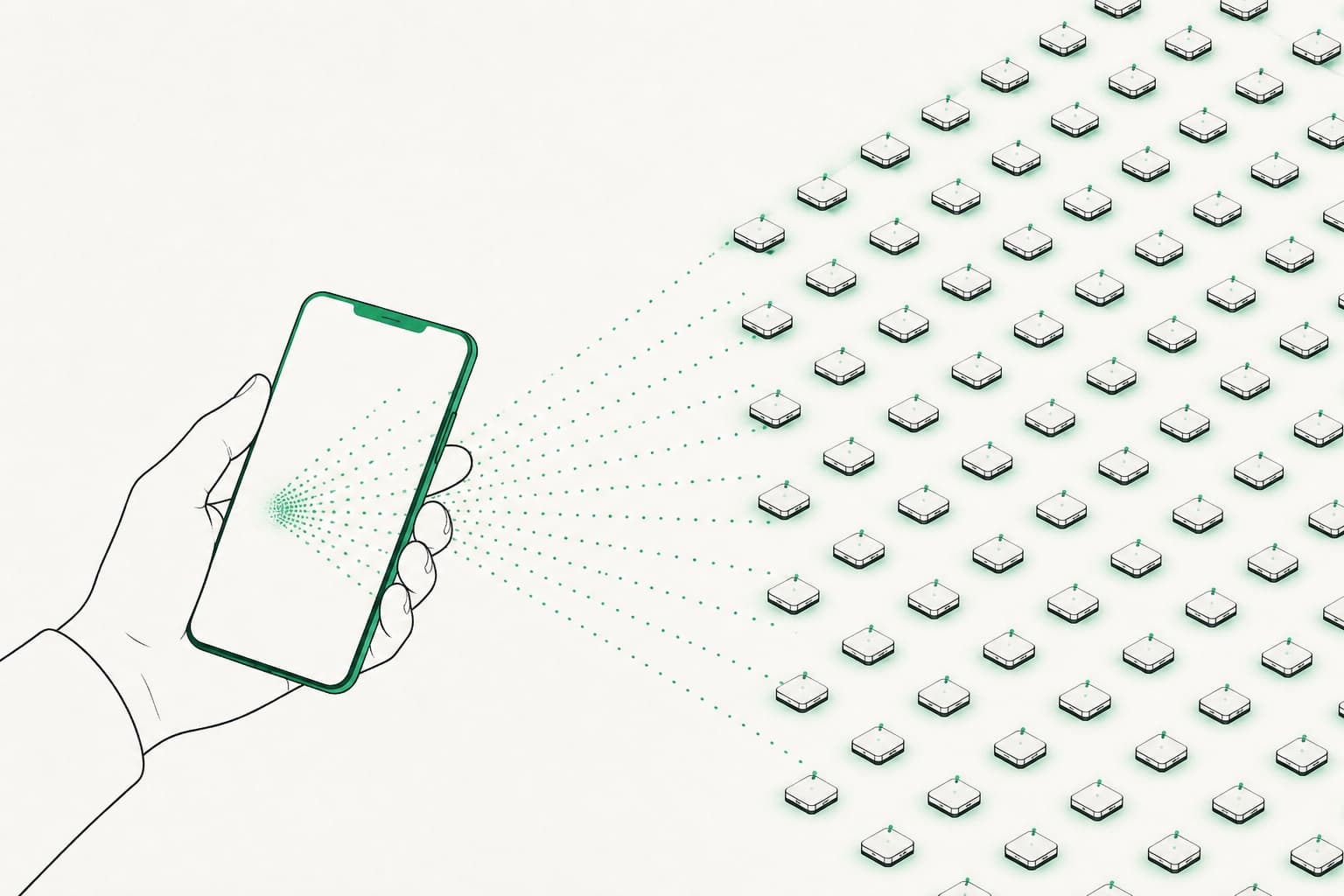
One — a fleet, not a seat. Think of the single-device AI agents now proliferating — an agent running on one Mac, controlling one machine, doing one thing at a time. Karma Box manages a thousand of them as one coordinated AI Team. Where those tools cap at a single device, Karma Box multiplies the ceiling on parallel execution until the constraint is your imagination rather than your hardware. This is the honest reading of the TPIsoftware governance appliance, taken one scale further down: when your agent count goes from three to a thousand, governance isn't a feature you add later. It's the only reason the fleet is usable.
Two — mobile first. Your agents don't wait for you to get back to a desk, so your command layer can't live there either. The Box is designed to be run from a phone — the whole fleet, in your hand, wherever you happen to be standing.
Three — sovereign AI. Same substance Snowflake just sold to French institutions, sized for a person: your hardware, your data, your agents, under your law. No kill switch scenario in the vendor's blog post, because there's no vendor to switch it. Portability isn't a clause in your contract — the hardware is on your desk.
Four — single-point amplification. This is the part that gets lost in listicles. The point of a thousand agents is not that you have a thousand. It's that any single device you activate becomes a fully armed unit of your team — one node, brought online, instantly contributing to a coordinated whole. You scale by deciding, not by procuring.
The name of the category is sovereign AI avatars — AI with your authority, on your infrastructure, under your control. Germany bought the institutional version with a few hundred million euros. The individual version is a box.
6. The thing to watch

Watch the wording. That's the tell that this has stopped being a slogan.
When a vendor's marketing copy starts using the phrase kill switch scenarios, the conversation has moved from principle to procurement. When a government routes hundreds of millions into industrial models instead of chatbots, it's buying capability it intends to own. When an appliance ships with an audit-log console and a metering API, someone has decided that ungoverned autonomy is a liability rather than a perk. And when a frontier lab lets outsiders sit inside its systems with publishable findings, it has concluded that being auditable is worth more than being opaque.
Countries did this first because they had the leverage and the lawyers. Enterprises are doing it now because the procurement checklist finally caught up. Individuals are next, and they'll get there for a simpler reason: they have no leverage at all, so they need the shortcut.
The shortcut is the same one Germany, France and Taiwan all reached for this week. Own the compute. Own the agents. Own the data. Own the rules.
Hold the box.